Hellbrunn history: the archbishop’s villa
Going without a car?The boat trip includes the palace ticket, the Salzburg Card covers admission and the bus, and every option cancels free up to 24 hours before. Reserve the date now, decide later.
Check availabilityMarkus Sittikus
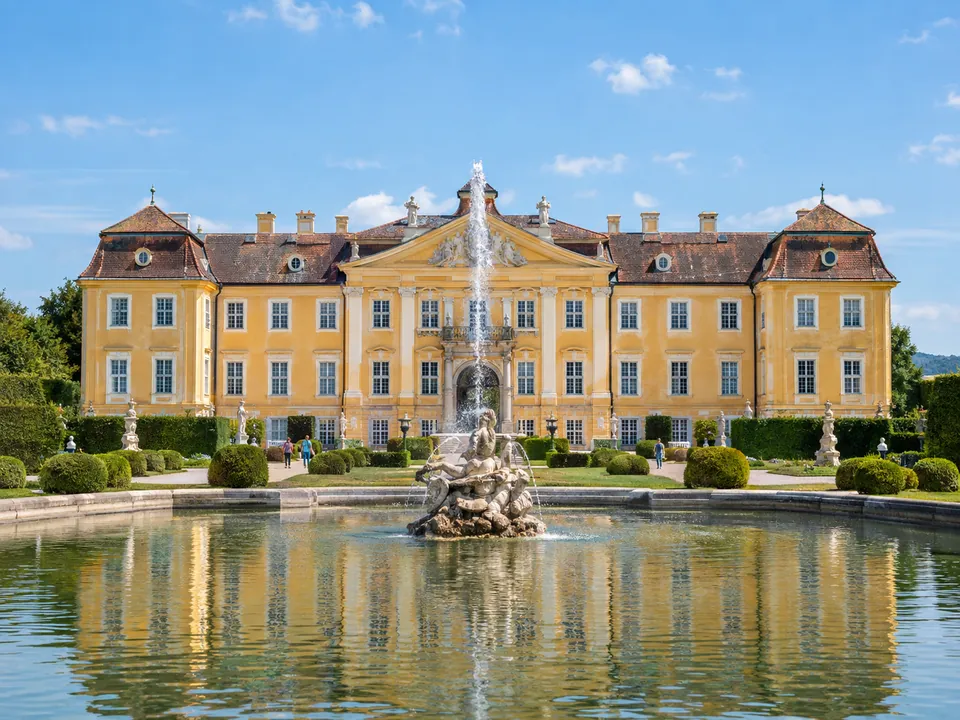
Markus Sittikus von Hohenems was born in 1574 in Hohenems and was elected Prince-Archbishop of Salzburg in 1612. He ruled for seven years and died in 1619. In the year of his election he called the architect Santino Solari (1576–1646) to Salzburg, and within a year work had begun on a summer villa five kilometres south of the city, beside the natural spring that still feeds the fountains. Building started in spring 1613 and the essential parts were complete by 1615; the whole complex, park and theatre included, went on growing until the archbishop’s death.
Solari and the villa suburbana
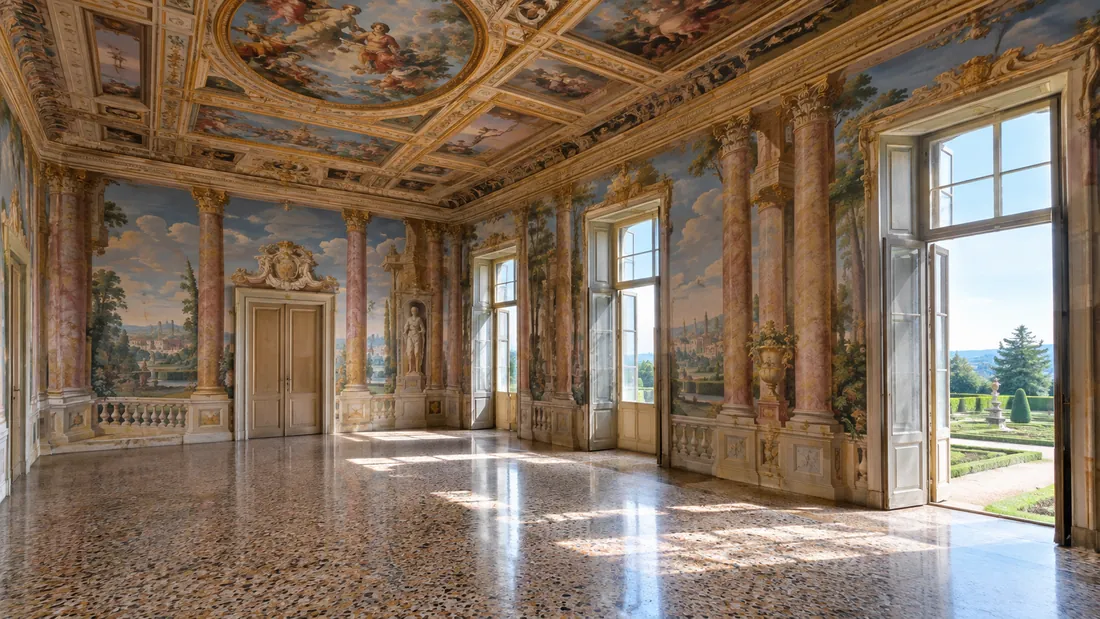
Solari built to an Italian model, the villa suburbana: a house outside the city for a day’s pleasure in summer, to be ridden out to in the morning and left in the evening. That is why Hellbrunn has no bedroom, which surprises visitors who expect a palace to be somewhere a prince slept. The interiors were painted by Fra Arsenio Mascagni, a Servite monk from Florence; the sculptors were Hans Waldburger and Hans Conrad Asper. The palace exhibition today, GrandDelight (SchauLust in German), “the unexpected world of Markus Sittikus”, is interactive and takes about 30 minutes with the audio guide. What the exhibition and the park hold.
The joke on the guests
The gardens were the point of the villa, and the trick fountains were the point of the gardens. Laid out from 1613 in the Mannerist taste for surprise, they open with the Roman theatre and the prince’s table: a stone dining table with stone seats, fed from below, where the archbishop entertained and then had the water turned on. Every seat sprays its guest; the host’s stays dry. The grottoes beyond, with their Greek gods, optical illusions and jets hidden in the paths, are the same idea in a dozen forms, and they still run on the natural spring that feeds the Altemps fountain and its star pond. The stations, in order.
A house with no bedroom, a garden with no dry seat but one: the whole place was built for an afternoon.
The Stone Theatre and the Monatsschlössl
On the hillside above the park a natural rock stage, the Steintheater, was used for performances from 1617; it is one of the earliest open-air stages north of the Alps. Above it stands the Monatsschlössl, a small yellow lodge of 1615 said to have been built in a single month, which now houses the folk museum of traditional furniture, masks and theatre and is included in the palace ticket. Both are reached on foot through the free park.
1750: the mechanical theatre
The trick fountains kept growing after their founder. The mechanical theatre was added in 1750, a century and more later: 163 water-driven figures showing the life of a Baroque town, still moving on water today. It is the station most visitors remember, and the one whose figure count varies most between sources; 163 is the palace’s.
The cathedral, and a coin
In 1614, with Hellbrunn a year old, Markus Sittikus laid the foundation stone of the new Salzburg Cathedral, again to a design by Solari, so a walk across the cathedral square in the old town and an afternoon at the fountains are the same patron and the same architect in two moods. Hellbrunn appeared on an Austrian commemorative coin of 2004, which is as good a measure as any of how the villa outgrew its builder. The old town and Hellbrunn in two days.
The concert inside the palace, 45 minutes of Baroque works and Mozart arias on a historical harpsichord, is the one way to sit in Solari’s rooms and hear the kind of music they were built for. Admission to the fountains is separate. The palace concerts.
Seeing it
All of this is on one ticket, about sixteen and a half euros for an adult: the fountains with the audio guide, the palace exhibition, and the folk museum in the Monatsschlössl. The boat trip from the old town includes that ticket and arrives the way a guest of the archbishop might have, by water.
Book the boat trip, admission included
About 30 minutes on the Salzach, ten on the vintage double-decker, then priority entry to the fountains and the palace with the audio guide. Free cancellation up to 24 hours before.
Frequently asked questions
Who built Hellbrunn Palace?
Prince-Archbishop Markus Sittikus von Hohenems had it built by the architect Santino Solari from 1613; it was essentially finished by 1615. The same pair began Salzburg Cathedral in 1614. What they built in the garden.
Why does Hellbrunn have no bedroom?
Because it was a villa suburbana, a summer day residence outside the city: the archbishop rode out in the morning and back at night. The palace exhibition, about 30 minutes, is built around that idea. The exhibition and the rest.
How old are the Hellbrunn trick fountains?
Over 400 years: laid out from 1613 and still fed by the same natural spring. The mechanical theatre with its 163 figures was added in 1750. Whether they are worth the trip.
Was The Sound of Music filmed at Hellbrunn?
No. The gazebo in the park was moved here from Schloss Leopoldskron after filming, widely reported as 1991, and the gazebo interiors were a studio set in Los Angeles. The gazebo, and what was filmed where.